Why cannabis storage matters
Fresh cannabis is fragile. Light, heat, air, and humidity can flatten aroma, dry out flower, and make a good pickup feel older than it is. Storage is not about buying the fanciest jar on the shelf. It is about controlling the few conditions that do the most damage.
The best setup keeps cannabis cool, dark, sealed, and stable. That protects terpenes, keeps texture consistent, and helps you remember whether a session changed because of the strain itself or because the flower sat in a bad container for too long.
The four things that ruin flower
- Light. UV exposure breaks down cannabinoids and terpenes. A clear jar on a sunny windowsill is one of the fastest ways to lose aroma and character.
- Heat. Warm rooms dry flower and evaporate terpenes. Above roughly 77 degrees F, quality can fade faster.
- Air. Oxygen slowly changes cannabinoids and dries flower every time the container is opened.
- Humidity swings. Too dry and the flower gets harsh. Too damp and mold becomes the bigger concern.
Most storage advice is just a different way of solving those four problems.
Temperature: keep it cool, not cold
The useful range for cannabis storage is usually around 60 to 70 degrees F. That is cool enough to protect aroma without creating the condensation problems that come from cold storage.
Skip the fridge and freezer for everyday storage. Cold makes trichomes brittle, and every open-close cycle can pull moisture into the container. A drawer, closet, pantry, or dedicated storage box in a temperature-stable room is usually the better call.
If you store more than one jar, label each one with the strain and storage date. That small habit makes it easier to connect freshness, flavor, and session notes later.
Humidity: aim for stable, not wet
Humidity matters because flower needs enough moisture to stay pleasant without giving mold a place to start. Many consumers use humidity packs in the 55 to 62 percent relative humidity range to keep jars steady.
Airtight glass jars are the baseline because they limit air exchange and make it easy to see what is inside. Use a jar that fits the amount you have. A small stash rattling around in a huge jar sits in mostly air, so two smaller jars often beat one big one.
Avoid plastic baggies for anything longer than short transport. They do not seal well, they can pull trichomes from flower, and they give you almost no control over humidity.
Material-by-material storage choices
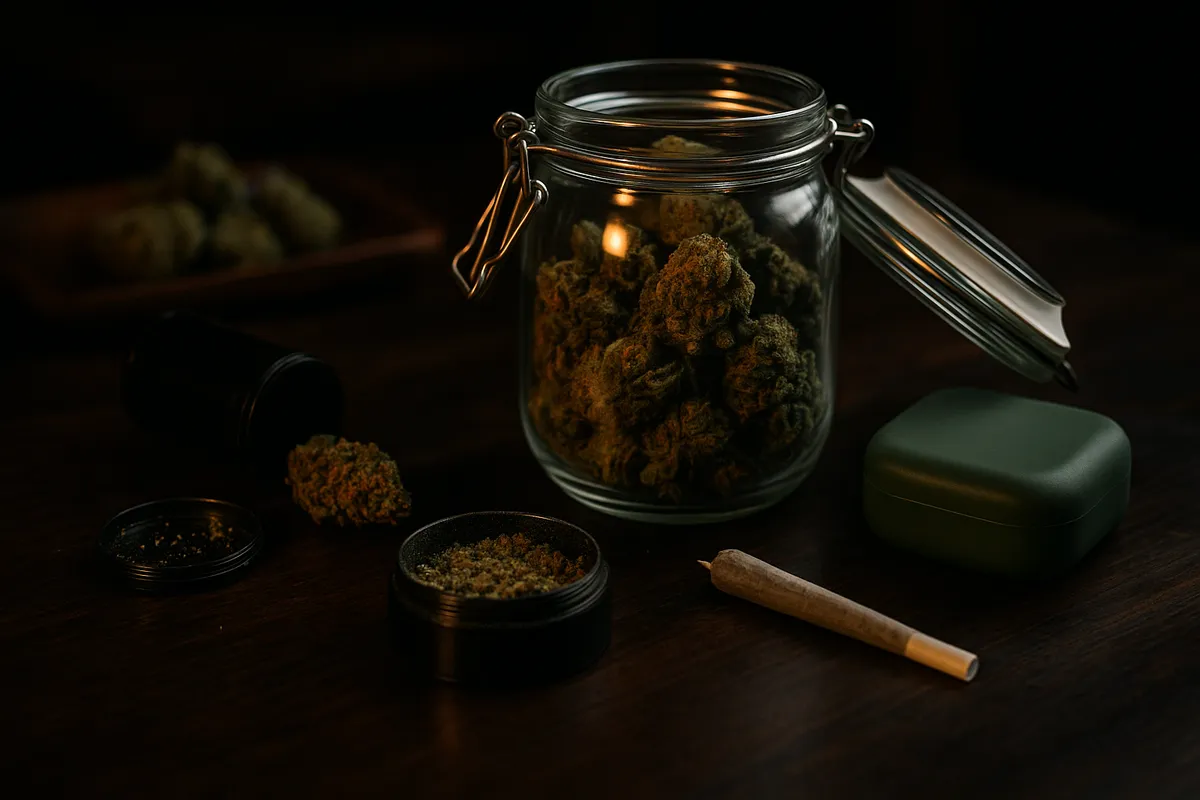
Airtight glass jars are the safest default for home storage. They do not add flavor, they seal well, and they pair easily with humidity packs. Keep them in a cabinet or drawer so light is not part of the equation.
Aluminum tubes and jars solve the light problem outright. They are also tougher than glass, which makes them useful for travel, clumsy shelves, or keeping a small amount separate from your main stash.
Smell-proof cases and pouches are for odor control, not freshness by themselves. Carbon-lined options help contain smell, but flower still belongs inside a sealed jar or tube before it goes into a pouch.
Child-resistant containers matter when kids share the home. Stiff lids are not the same as certified child-resistant storage, so use containers made for that purpose.
The quick decision table
| Your situation | Best fit |
|---|---|
| Home stash, simple and inexpensive | Airtight glass jar |
| Small amount on the move | Aluminum tube |
| Dark, durable desk storage | Aluminum jar |
| Odor control in a bag | Carbon-lined pouch or case |
| Kids in the house | Certified child-resistant container |
| Flower drying out too quickly | Smaller jar plus humidity pack |
Short-term vs. long-term storage
For short-term storage, focus on the basics: sealed container, cool room, no direct light, and stable humidity. If you expect to use the flower within a few weeks, that is usually enough.
For longer storage, tighten the routine. Use UV-blocking or opaque containers, check humidity packs, keep jars closed unless you need them, and separate strains so one jar does not get opened constantly. If you buy in bulk, portion the flower into smaller containers and open only the one you are actively using.
What to skip
- The windowsill. Direct sun can ruin aroma before you notice anything looks wrong.
- Plastic baggies. Fine for a short ride home, weak for real storage.
- The fridge or freezer. Condensation and brittle trichomes are not worth the risk for normal use.
- Oversized jars. Too much empty space means too much air.
- Constant opening. Every open jar trades freshness for access.
Keep notes on freshness
Storage gets easier when you track what changed. If a strain tasted great in week one and harsh in week four, note the jar, room, humidity pack, and storage date alongside the session. DankLog’s strain tracking gives you one place to keep those details with the effects you felt, so your next storage choice is based on your own experience.