Best Strains for Anxiety: Low-Paranoia Picks and Balanced CBD:THC Options
Written by Tony Ciovacco, founder of DankLog. General information, not medical advice.
The same strain can feel calm to one person and jittery to another, and sometimes to the same person on a different day. Three things usually explain it: how much THC you consume, how much CBD sits beside it, and the terpene profile. This guide focuses on strains consumers commonly report as calm and less likely to bring on anxiety or paranoia: CBD-forward and balanced CBD:THC picks first, then mellow THC-dominant strains for people who already know how THC affects them.
Set and setting matter as much as the strain. An unfamiliar strain in an unfamiliar place while you are already on edge is a rough combination, so start somewhere comfortable and familiar.
Quick Reference: 12 Low-Paranoia Strains at a Glance
| Strain | Type | THC | CBD | Best For | Key Terpenes |
|---|---|---|---|---|---|
| ACDC | Hybrid | ~1% | ~20% | A no-high option, any time of day | Myrcene, Pinene |
| Remedy | Indica | <1% | ~15% | CBD beginners, daily use | Myrcene, Caryophyllene |
| Harlequin | Sativa-leaning | ~7% | ~13% | Clear-headed daytime calm | Myrcene, Pinene |
| Cannatonic | Hybrid | ~6% | ~6% | Balanced beginners, mild euphoria | Myrcene, Limonene |
| Blue Dream | Hybrid | 17-24% | <1% | Gentle daytime calm without sedation | Myrcene, Caryophyllene |
| Lavender Kush | Indica | 19-27% | <1% | Deep evening relaxation | Linalool, Myrcene |
| Do-Si-Dos | Indica-hybrid | 19-30% | <1% | Body tension and a busy mind | Linalool, Limonene |
| Granddaddy Purple | Indica | 17-23% | <1% | Evening wind-down | Myrcene, Linalool |
| Northern Lights | Indica | 16-21% | <1% | Predictable full-body calm | Myrcene, Caryophyllene |
| Bubba Kush | Indica | 15-22% | <1% | Heavy, grounding evenings | Caryophyllene, Myrcene |
| Jack Herer | Sativa | 18-24% | <1% | Focus when you feel restless | Pinene, Terpinolene |
| Strawberry Cough | Sativa | 15-20% | <1% | Social settings | Myrcene, Pinene |
These are typical reported ranges. They vary by grower and batch, so check the product label for the real THC and CBD numbers. The list runs from most beginner-friendly (highest CBD) to experienced-user territory (highest THC). If you are new, start near the top.
Cannabis and Anxiety: What the Research Suggests
Researchers describe an endocannabinoid system that helps regulate mood, sleep, and stress response, and both THC and CBD act on it, but differently. The research is real but limited, and much of it comes from small studies or animal work. A few findings worth knowing before you pick a strain.
Dose changes the direction. In a placebo-controlled lab study of 42 healthy volunteers, Childs, Lutz and de Wit (2017) gave oral THC at 0, 7.5 or 12.5 mg before a stress task. The 7.5 mg group reported less distress afterward, while the 12.5 mg group reported more negative mood. That is one small study of oral THC in healthy adults, not a universal threshold, but it matches what consumers describe: a little can settle you, a bit more can tip you over.
THC and CBD tend to pull in different directions. A 2020 critical appraisal by Sharpe and colleagues found that THC has been associated with anxiety-increasing responses in humans, while calming effects have been attributed mainly to CBD. In a randomized lab study of healthy participants, Englund and colleagues (2013) found that those given 600 mg of oral CBD before intravenous THC reported less paranoia than those given placebo. A 2015 review in Neurotherapeutics concluded that preclinical evidence for CBD and anxiety is strong, while human evidence is limited mostly to single doses and few clinical populations. None of this proves CBD will work for any one person.
Terpene research is early. In a small lab study of 20 healthy adults, Spindle and colleagues (2024) found that vaporized d-limonene alongside a high THC dose reduced “anxious” and “paranoid” ratings compared with THC alone. That was isolated limonene, not whole flower. The linalool and caryophyllene evidence is in mice: Harada and colleagues (2018) found calmer behavior after linalool odor exposure, and Bahi and colleagues (2014) reported anxiety-related behavior changes after caryophyllene, which Gertsch and colleagues (2008) showed binds CB2 receptors. Animal studies cannot tell us what happens in people, so treat terpene guidance as informed guesswork.
The practical takeaway: favor CBD-forward or balanced strains, keep THC low until you know your limit, and pay attention to terpenes. If you make edibles, how you cook affects which terpenes survive.
What Makes a Strain Feel Calm
Terpene Profile
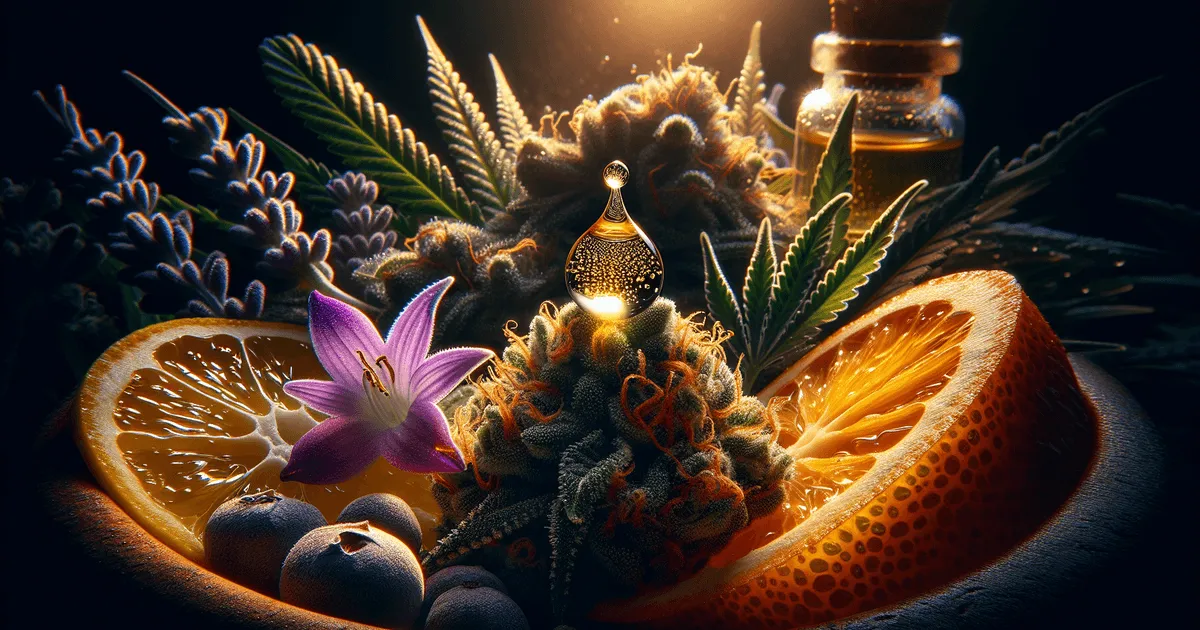
Terpenes are the aromatic compounds that shape how a strain smells and, consumers report, how it feels. Four come up most for calm strains:
- Linalool - Floral, lavender-like. Consumers often describe linalool-rich strains as gently sedating without heavy fog. Look for it in Lavender Kush, Do-Si-Dos, and Amnesia Haze.
- Myrcene - Earthy and musky, like hops, and very common in cannabis. Consumers report a body calm that gets heavier at higher amounts. Myrcene-dominant strains include OG Kush, Blue Dream, and Granddaddy Purple, and it is part of why many indica-leaning strains have a relaxing reputation.
- Caryophyllene - Peppery and spicy, and the terpene shown to bind CB2 receptors (see above). Found in GSC (Girl Scout Cookies), Bubba Kush, and Original Glue.
- Limonene - Citrus and bright, often described as mood-lifting, which can offset the heaviness of myrcene-dominant strains. Found in Super Lemon Haze, Do-Si-Dos, and Wedding Cake.
CBD Content Matters
For low-paranoia picks, the CBD-to-THC ratio is the first thing to check. Consumers consistently report that the same amount of THC feels smoother with CBD alongside it, and the research above points the same way.
- 15:1+ CBD:THC - Little to no high. Strains: ACDC, Remedy, Charlotte’s Web, Ringo’s Gift.
- Roughly 2:1 to 5:2 CBD:THC - A mild mood shift most people can work through. Strain: Harlequin.
- 1:1 CBD:THC - A noticeable but manageable high with CBD alongside. Strains: Cannatonic, Pennywise, Dancehall.
- 2:1+ THC:CBD - THC is in the driver’s seat. Better suited to people with tolerance who know their limit.
If you are new, start CBD-dominant or 1:1 and move up only if you want to.
Dose Is Everything
Since the effect of THC can flip with dose, dose is often a bigger lever than strain. A common starting framework, not a medical dose:
- Microdose (1-2.5mg THC): Often barely noticeable, a gentle loosening. A safe place to start. See our microdosing guide.
- Low dose (2.5-5mg THC): Mild relaxation and a slight mood lift. Many consumers settle here.
- Moderate dose (5-10mg THC): A clear high that can go either way depending on tolerance, CBD, and setting.
- High dose (10mg+ THC): Racing thoughts and paranoia become more likely, especially without CBD.
Your tolerance shifts this ladder, and our tolerance calculator can help you think it through. Method matters too. Inhaled cannabis peaks within minutes, so you can take one small hit, wait, and reassess. Edibles peak in one to three hours, and taking a second dose too soon is the classic cause of edible overconsumption.
Strain Profiles
These are consumer-reported profiles, not clinical claims. Effects vary person to person.
Calming Strains (Indica-Leaning)
-
Granddaddy Purple - THC 17-23%, high myrcene and linalool. Deep body relaxation, best on evenings when you have nothing left to do. Expect couch lock at higher doses. The grape and berry flavor is gentle on sensitive throats.
-
Northern Lights - THC 16-21%, myrcene dominant. Bred since the 1980s and known for consistency across growers, which matters when you want predictable results. Consumers report it slows thoughts to a manageable pace.
-
Lavender Kush - THC 19-27%, linalool-dominant with myrcene. It smells like lavender because of its linalool content. Heavy and sedating, so keep it for evenings. At higher doses it can make you drowsy, which makes it a crossover pick if a busy mind disrupts your sleep.
-
Do-Si-Dos - THC 19-30%, high linalool and limonene. A GSC cross that pairs cookie-lineage euphoria with a calming body feel. It is the strongest strain in this section, so start with one small hit and wait 15 minutes.
-
Bubba Kush - THC 15-22%, caryophyllene-rich. A heavy, grounding body high, often compared to a weighted blanket. Not for daytime, but a favorite for nights when your mind will not stop spinning.
Balanced Strains (Hybrid)
-
Remedy - CBD ~15%, THC <1%. No high, no euphoria, no cognitive shift. Consumers describe it as taking the edge off, and the myrcene and caryophyllene profile adds a light body calm. Available in flower, pre-roll, and tincture form at many dispensaries. A low-risk place to start if you are nervous about trying cannabis.
-
Blue Dream - THC 17-24%, high myrcene with caryophyllene. A widely grown strain that consumers often describe as gentle and balanced. It leans slightly euphoric without racing, and consumers often pick it for daytime. Respect the THC and start with one hit.
-
Harlequin - Roughly a 2:1 to 5:2 CBD:THC ratio. Consumers like it for a clear head and a wide margin for error on dose. You can work and socialize on it.
-
ACDC - 20:1 CBD:THC. Essentially no high, so it suits anyone who needs to stay fully clear for work, driving, or caring for children, or who wants to avoid THC’s effects altogether.
-
Cannatonic - Usually 1:1. Gentle relaxation with mild euphoria, a good training-wheels option for people new to THC. Widely available, so budtenders can usually point you to a consistent source.
Uplifting Strains (Sativa-Leaning)
-
Jack Herer - THC 18-24%, pinene and terpinolene dominant. Clear-headed, focused energy that some consumers use to channel restlessness into tasks. Terpinolene-heavy strains can feel racy for sensitive people, so go low.
-
Strawberry Cough - THC 15-20%. Known for a sociable, alert feel and an approachable strawberry flavor. Try one small hit 15-20 minutes before a gathering.
What Can Make It Worse, and What to Skip
Cannabis does not calm everyone. These are the usual culprits:
- Too much THC is the number one cause. A dose that feels good at 5mg can feel awful at 15mg, especially with no CBD alongside it. Strains above roughly 25% THC with no CBD are built for experienced consumers.
- Edible overconsumption is a close second. With a 45-120 minute onset, “I don’t feel anything” leads to a second dose. Wait at least two hours.
- Concentrates. Dabs, shatter, and high-potency cartridges can run far above the potency of flower, which is a lot of THC, fast.
- Terpinolene-heavy and landrace sativas. Strains like Durban Poison or Thai tend to feel intensely cerebral, and consumers say that feels a lot like anxiety. Check lab results, and see our strain classification guide for why terpenes matter more than labels.
- Set and setting. Cannabis tends to amplify the mood you walk in with, so an unfamiliar place or a stressful stretch raises the odds of a rough time.
- A tolerance break. Come back at your old dose after a tolerance break and it will hit harder. Restart at a fraction.
- Large doses of any strain. Even Granddaddy Purple can backfire if you overshoot.
If it happens: the CDC notes that cannabis can cause unpleasant thoughts or feelings of anxiety and paranoia, and consumers report it passes, usually within a couple of hours. Our guide to preventing and handling greening out covers it in depth. The short version: sit down somewhere safe, drink water, change your environment, and slow your breathing. Some people swear by chewing black peppercorns, but that is anecdotal. If symptoms are severe or you feel unsafe, seek medical help.
When to Skip Cannabis and Talk to a Clinician
Cannabis is not a substitute for care. Talk to a doctor or mental health professional first, or instead, if:
- You have a diagnosed anxiety or panic disorder, or your anxiety is persistent, severe, or getting in the way of work, sleep, or relationships. Anxiety has many causes, and a clinician can help find yours.
- You or a close family member have a history of psychosis or schizophrenia. The CDC reports that people who use cannabis are more likely to develop psychosis, and that the association with schizophrenia is stronger with earlier and more frequent use.
- You are pregnant, planning to become pregnant, or breastfeeding. The CDC advises talking to your doctor, because THC can pass to a baby.
- You take prescription medication. CBD and THC can interact with some medications, so ask your prescriber or pharmacist.
- Cannabis itself reliably makes you more anxious or paranoid, or you find yourself needing more and more to get the same calm.
If you are in crisis or thinking about hurting yourself, call or text 988 (the Suicide & Crisis Lifeline in the US) or your local emergency number.
Consumption Methods
How you consume matters as much as what you consume.
- Vaping flower - Onset in 1-5 minutes, lasts 1-3 hours. Easiest to titrate: one small hit, wait 10 minutes, reassess. Lower temperatures (340-370F) tend to feel smoother.
- Tinctures - Onset in 15-45 minutes sublingually, lasts 4-6 hours. Precise milligram dosing suits consistent use. Hold under the tongue for 60 seconds.
- Edibles - Onset in 45-120 minutes, lasts 4-8 hours. The hardest to dose. Start at 2.5mg THC at most and do not redose for two hours.
- Smoking - Onset in 1-5 minutes, lasts 1-3 hours. Similar control to vaping with more throat irritation. One or two hits is enough to assess.
Inhalation is generally the easiest starting point because you can adjust in real time. Tinctures and edibles make more sense once you know how a strain affects you.
Track What Works for You
The best strain for your friend might be the wrong one for you. How your body metabolizes THC and your baseline mood both play a part. The most reliable way to find your own calm strains is to compare your own entries. If you want a step-by-step method, see how to find the cannabis strains that work for you, or set up a consumption journal. For a quick start, our guide to tracking your sessions covers the basics.
What to Log in DankLog
DankLog has no anxiety scale and no pre-session mood field, so here is where each detail goes:
- Strain, method, and amount - the variables you are testing. Amount is optional. If a stash item carries its THC % and CBD %, copy the CBD:THC ratio from the label.
- What you were going for - pick the vibe, such as Relax or Chill.
- How it went - the 1-5 rating, plus up to three vibes for how you felt. There is no anxious or paranoid option, so record a rough session as a low rating and a short note.
- Anything numeric or specific - put it in the session Notes, for example “start 6/10 tense, racing thoughts after 40 minutes.”
- Sleep - sleep tracking is separate, and you can optionally link a sleep entry to a session you choose.
DankLog’s strain picker scores the strains in your in-stock stash for the vibe you pick, so keep your calm rotation in your stash manager.
Reading Your Own Entries
After a couple of weeks, export your entries (JSON and CSV export are free) and sort them in a spreadsheet. A hypothetical example of what you might notice: a balanced 1:1 strain rated 4 at a small amount and rated 2 at a larger one, with “racing thoughts” in the Notes both times that second dose appears. That would suggest your limit with that strain sits lower than you assumed. Your own pattern may look nothing like this, which is the point.
Build a Rotation
Once you have a few entries you trust, you might build a short rotation:
- Daytime - CBD-dominant or balanced (Harlequin, ACDC)
- Social - mild and uplifting (Strawberry Cough, Jack Herer at a low dose)
- Evening - a calming indica (Granddaddy Purple, Northern Lights)
For new strains to try, see our trending strains for spring 2026. If your restlessness shows up at night, our cannabis and sleep tracking guide covers how to compare sessions against sleep. Minor cannabinoids such as CBG are mostly studied in preclinical work so far, and our minor cannabinoids guide covers what is known.
Track how each strain actually lands for you.
Free, at danklog.com.
Sources
- Childs E, Lutz JA, de Wit H. Dose-related effects of delta-9-THC on emotional responses to acute psychosocial stress. Drug and Alcohol Dependence, 2017.
- Sharpe L, Sinclair J, Kramer A, de Manincor M, Sarris J. Cannabis, a cause for anxiety? A critical appraisal of the anxiogenic and anxiolytic properties. Journal of Translational Medicine, 2020.
- Englund A, et al. Cannabidiol inhibits THC-elicited paranoid symptoms and hippocampal-dependent memory impairment. Journal of Psychopharmacology, 2013.
- Blessing EM, Steenkamp MM, Manzanares J, Marmar CR. Cannabidiol as a potential treatment for anxiety disorders. Neurotherapeutics, 2015.
- Spindle TR, et al. Vaporized D-limonene selectively mitigates the acute anxiogenic effects of delta-9-tetrahydrocannabinol in healthy adults who intermittently use cannabis. Drug and Alcohol Dependence, 2024.
- Harada H, Kashiwadani H, Kanmura Y, Kuwaki T. Linalool odor-induced anxiolytic effects in mice. Frontiers in Behavioral Neuroscience, 2018.
- Bahi A, et al. Beta-caryophyllene, a CB2 receptor agonist produces multiple behavioral changes relevant to anxiety and depression in mice. Physiology & Behavior, 2014.
- Gertsch J, et al. Beta-caryophyllene is a dietary cannabinoid. PNAS, 2008.
- CDC. Cannabis and Mental Health and Cannabis and Pregnancy.
Frequently Asked Questions
Can cannabis help with anxiety?
Some consumers report that it does, and some report the opposite, so strain and dose matter. Research suggests CBD may have calming properties, and consumers often report that low doses of CBD-rich or balanced strains like Harlequin or ACDC feel the most comfortable. High-THC strains without CBD are more likely to bring on anxiety. Cannabis is not a replacement for professional care, so talk to a clinician if anxiety is persistent or severe.
Which strains are least likely to cause paranoia?
CBD-forward and balanced strains are the usual first picks: ACDC (20:1 CBD:THC), Remedy (about 15% CBD), Harlequin (roughly 2:1 to 5:2), and Cannatonic (1:1). In a small lab study, participants given CBD before THC reported less paranoia than those given placebo. Among THC-dominant strains, consumers often report Northern Lights, Granddaddy Purple, and Blue Dream as mellow at small doses. High-THC, zero-CBD strains and terpinolene-heavy strains are the ones most often linked to racing thoughts.
What is the best strain for anxiety?
For beginners or low tolerance, ACDC, Remedy, or Harlequin are the usual starting points because the high CBD content softens THC. For experienced consumers who tolerate THC, Granddaddy Purple, Lavender Kush, or Northern Lights offer strong indica relaxation, and Blue Dream sits in the middle. The best strain depends on tolerance, time of day, and your own terpene sensitivities.
Does indica or sativa help more with anxiety?
Neither label reliably predicts it. Terpene profile and cannabinoid content matter more. Many indicas feel calming because they run high in myrcene, while some sativa-leaning strains like Jack Herer are popular for daytime focus. Check lab results rather than labels.
How much THC should I take?
Start with 2.5mg THC or less, especially without CBD. Consumers often settle between 2.5-5mg. In one small lab study of 42 healthy adults, 7.5 mg of oral THC reduced reported stress while 12.5 mg increased negative mood, so the line can sit lower than people expect. With a 1:1 strain, some people tolerate more because the CBD smooths the edge. You can always take more next time, but you cannot take less.
Can cannabis make anxiety or paranoia worse?
Yes, particularly at high THC doses with no CBD. The CDC notes that cannabis can cause unpleasant thoughts or feelings of anxiety and paranoia, and edibles are the most common culprit because of delayed onset. If it happens, sit somewhere safe, drink water, change your environment, and slow your breathing. Consumers report it usually passes within a couple of hours. Seek medical help if symptoms are severe.
What is the best weed strain for stress?
It depends on the kind of stress. For physical tension, consumers like myrcene-dominant strains such as Granddaddy Purple and Northern Lights. For a busy mind, balanced CBD:THC strains like Cannatonic or Harlequin are popular. When you still need to function, ACDC gives a no-high option.
Is CBD or THC better for anxiety?
CBD is generally more predictable and does not cause a high. Research on CBD is promising but early, and THC has been linked to anxiety-increasing responses at higher doses. Many people find that a little THC with CBD (1:1 or 5:1 CBD:THC) feels better than CBD alone. If you are new, start CBD-only or high-CBD and add THC slowly.