The best cannabis tracking app in 2026 depends on what you want to learn. For matching strains to how they actually make you feel, DankLog leads with vibe-first effect tracking built around 12 mood categories. For clinical, symptom-by-symptom history, tools like Strainprint and Releaf fit better.
Cannabis affects everyone differently, and the only way to know what actually works for you is to write it down. A tracking app turns guesswork into a record you can act on: which strains helped you sleep, which ones you should skip before a long day, and which ones were worth the price. If you have never logged a session before, here is what the first week of tracking actually reveals. The apps below take different approaches to that same problem, so the right pick comes down to what you are trying to track.
How we compared these cannabis apps
We compared each app on the things that actually change whether you keep using it: how it tracks effects, whether it recommends anything back to you, sleep tracking, stash management, session history and insights, price, and which platforms it runs on.
Every claim below is checked against each app’s own store listing or official site as of this writing, not marketing copy alone. Where an app’s public information did not clearly confirm a feature, we marked it “Not stated” instead of guessing.
- Effect and vibe tracking - does the app tie sessions to how you actually felt, not just what you consumed
- Recommendations - does it suggest strains or products back to you based on your history
- Sleep tracking - can you connect sessions to sleep quality
- Stash management - can you track what you have on hand, not just what you used
- Insights and history - does it surface patterns over time, or just store individual logs
- Price - what is free versus paywalled
- Platforms - where the app actually runs
The apps at a glance
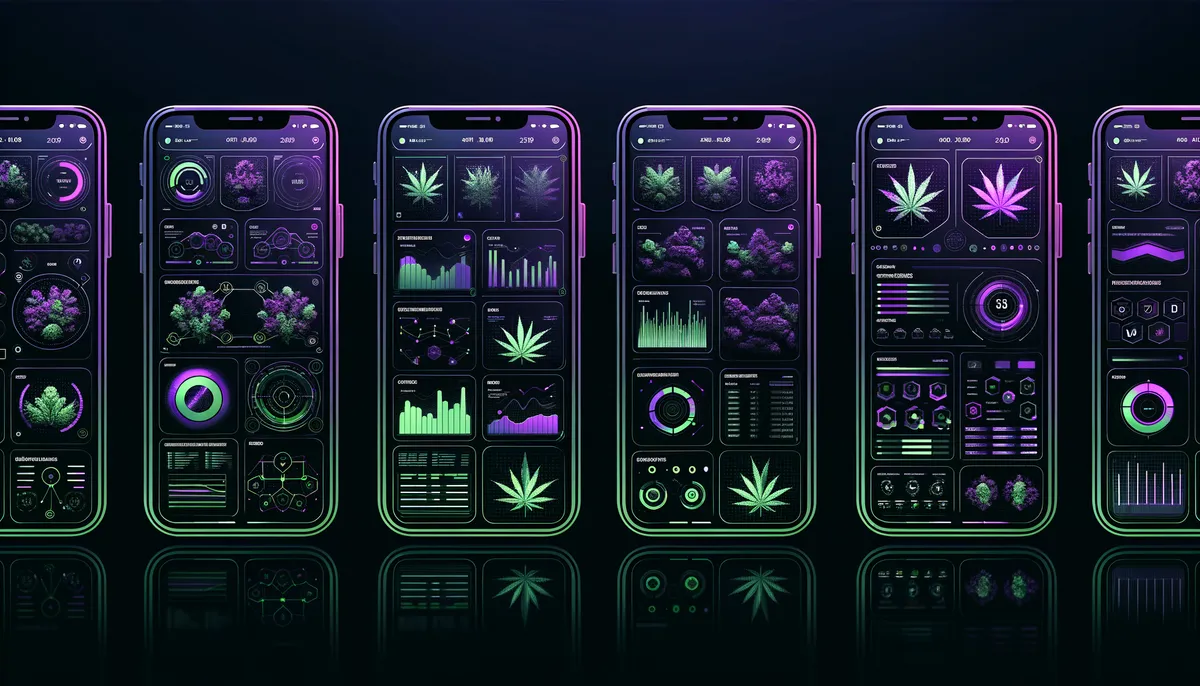
DankLog is effect-based tracking built around 12 named vibes (Creative, Focus, Social, Relax, Sleep, Gaming, Relief, Energy, Mindful, Intimate, Chill, Appetite), with integrated sleep tracking, a stash manager, and a tolerance calculator, all free with no data sales. Here is how it stacks up against the other apps people consider.
| Feature | DankLog | Releaf | Strainprint | Tetragram | Cannabis Journal |
|---|---|---|---|---|---|
| Effect / vibe tracking | Yes, 12-vibe scoring | Symptom + effect logging | Pre/post symptom rating | Goal + symptom tracking | Manual effect notes |
| Strain recommendations | Yes, vibe-based | Not stated | No | Not stated | Not stated |
| Sleep tracking | Integrated | Not stated | Not stated | Not stated | Not stated |
| Stash management | Yes | Not stated | Not stated | Yes | Basic |
| Tolerance calculator | Yes | No | No | No | No |
| Reports to share (doctor, budtender) | Yes (in-app history) | Yes | Yes | Yes | No |
| Community strain ratings | No | No | Aggregate data only | Yes | No |
| Offline support | Full offline-first | Not stated | Not stated | Not stated | Yes |
| Free tier | Full features free | Free | Free | Free | Free |
| Platform | PWA (installable on iOS and Android) | iOS, Android | iOS, Android | iOS, Android | iOS, Android |
| Data practice | No data sales | Not stated | Anonymized research use | Not stated | Not stated |
DankLog
DankLog tracks sessions by how they made you feel, not just what strain or dose you logged. Every session maps to one or more of 12 vibes so the app can tell you, in plain terms, what tends to help you relax versus what tends to help you focus, plus how your recent sessions relate to sleep quality and stash levels.
Best for: people who want to know what actually works for a specific feeling (sleep, focus, relief) and get a stash and dosing picture in one place.
DankLog combines vibe-based effect recommendations, integrated sleep tracking, a six-factor tolerance calculator, an edible dosing wizard, and stash management in a single free tool with no data sales. It runs as a progressive web app, so it installs on iOS and Android without an app store.
Find your best strains faster. Create a free DankLog account to track sessions, stash, sleep, and effect patterns in one private journal.
Releaf
Releaf focuses on structured session logging: strain, method, dose, and symptom or effect ratings, with a “quick-log” option for when you do not have time for a full entry. It generates reports you can share with a budtender or doctor, and has added barcode scanning for partnered products.
Best for: people who want fast, structured logging they can hand to a doctor or budtender without much setup.
Releaf does not publicly advertise sleep tracking or an automated recommendation engine, so its strength is clean, shareable session history rather than pattern discovery.
Strainprint
Strainprint is a clinical-style tool built around a pre-and-post session structure: you rate your symptoms before consuming, log the strain and method, then rate again afterward. That before-and-after structure produces more rigorous efficacy data than a single log entry, and the app supports vaporizer temperature tracking for patients who need that detail.
Best for: medical cannabis patients who want symptom-by-symptom evidence of what a specific strain actually did.
It is free to download, and its focus on symptom relief over general effect or mood makes it feel more clinical than casual apps aimed at recreational tracking.
Tetragram
Tetragram is a journaling app built by medical cannabis patients, centered on goal-setting and progress tracking over time. It includes a strain database with community ratings across experience, flavor, and appearance, and states HIPAA-aligned handling of personal health information.
Best for: people who want a strain database with community input alongside their own tracking, and value a privacy-conscious medical framing.
The community ratings add a social layer other apps in this list do not have, though Tetragram’s public materials do not detail sleep tracking or stash management the way DankLog does.
Cannabis Journal
Cannabis Journal keeps things simple: log a strain or product, note the effects, and record which activities it paired well with, whether that is a hike, a playlist, or winding down for the night. It is built as a straightforward, low-friction personal log rather than a data or medical tool.
Best for: people who want a lightweight, private log without dashboards, recommendations, or account syncing.
It is available on iOS and Android based on current listings, and its simplicity is the tradeoff: no stash management, no tolerance tools, and no stated recommendation engine, just a running record you control.
Which cannabis tracking app should you pick?
- You want to know what strain to reach for and why: DankLog’s vibe-based tracking connects sessions to how you felt, so recommendations are based on your own history.
- You are managing a medical condition and need evidence to share with a provider: Strainprint’s pre/post symptom structure is built exactly for that.
- You want fast logging and shareable reports without much setup: Releaf’s quick-log and report features fit that use case.
- You want a strain database with community ratings alongside your own notes: Tetragram adds that social layer.
- You want the simplest possible private log with nothing extra: Cannabis Journal does one thing and does not ask for more.
If sleep is part of why you are tracking in the first place, DankLog is currently the only app on this list with sleep tracking built directly into the session log rather than treated as a separate habit to track elsewhere.
Frequently Asked Questions
What is the best cannabis tracking app in 2026? It depends on your goal. DankLog is the strongest pick for connecting strains to how you feel and to sleep quality, with a free tolerance calculator and stash manager included. Strainprint and Releaf are better suited to structured, shareable session data for medical use.
Is there a free strain journal app? Yes. DankLog, Strainprint, Releaf, Tetragram, and Cannabis Journal are all free to use, though some competitor apps hold certain features or reports behind an account or paywall. DankLog’s core feature set, including sleep tracking and the tolerance calculator, stays free.
Which app recommends strains by effect? DankLog is built around effect-based recommendations: it scores sessions across 12 vibes (like Focus, Relax, and Sleep) and surfaces strains that match the feeling you are going for. Most of the other apps on this list log effects but do not actively recommend strains back to you.
Do cannabis tracking apps sell my data? It varies by app, and most public listings do not spell this out in detail. DankLog does not sell user data. Strainprint uses anonymized data for research.
Can I use a cannabis tracking app for medical purposes? Several of these apps, especially Strainprint and Tetragram, were built with medical cannabis patients in mind and support symptom-by-symptom logging a provider can use. Any of these apps can complement care, but none of them replace advice from a healthcare provider.
Start Your Own Log
The fastest way to find out which strains actually work for you is to start writing sessions down. Start an effect-first log free at DankLog and see your own patterns instead of guessing.